Put an end to this green genocide
The Baka
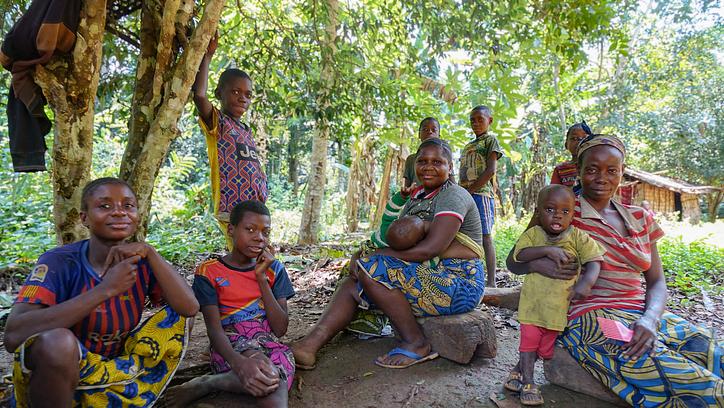
Few people on earth have as close a relationship to the forest as the Baka, Indigenous hunter gatherers who have lived in, protected and shaped the Congo Basin rainforest for generations. Yet they are facing human rights abuses in the name of conservation.
The creation of Protected Areas on their ancestral lands, from colonial times up until today, has brought violence, land theft, dispossession and hunger to the Baka. Park rangers, funded and equipped by big conservation organizations (like WWF and African Parks), subject them to harassment, rape, beatings, torture and even death.
Once their land is stolen, their sustainable ways of life are criminalized and they are pushed into “alternative livelihoods” to conform with mainstream society. Self-sufficient people are turned into landless and dependent “beneficiaries" of conservation-funded projects or into tourist attractions; while the real culprits of environmental destruction, like mining, oil, logging companies and trophy hunters are considered “partners” of conservation and allowed to carry on with business as usual.
The very existence of the Baka as a people is threatened. It’s time to decolonize conservation.
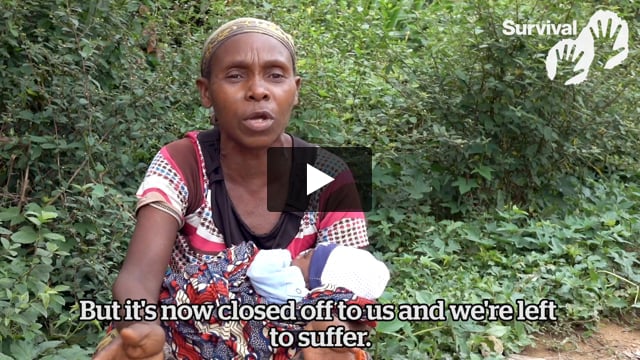
For decades, Survival has been investigating and exposing the human rights abuses faced by the Baka people in the name of conservation. We have held conservation NGOs accountable, stopped illegal conservation projects, and taken the Baka’s fight for their rights to a global stage.
We spent months on the ground talking with different Baka communities in Congo and Cameroon and interviewed hundreds of people. The overwhelming dark reality of conservation can be summarized in these words from a local leader: “This is not conservation, it's destruction”.
Now it’s your time to act.
Conservation is destroying not just the Baka, but also the forest they protect. Read more about our investigations and take action.
Help us to put an end to this green genocide, by asking the funders and supporters of these destructive conservation projects to stop violating the Baka’s human rights.
Put an end to this green genocide
Survival's investigations in Congo Basin:
A “green” war zone: Odzala-Kokoua National Park, Republic of Congo
<
“We need the forest. Our kids don’t know the animals anymore nor about our traditional medicinal plants. The Baka now live on the road. Telling you this hurts my heart. But the forest is also ill without the Baka”, Baka man, Republic of Congo.
Odzala-Kokoua National Park was established in 1935 by French colonisers on Baka land and it’s one of the oldest parks in Africa. In September 2023 it became a UNESCO World Heritage Site. Since 2010, the park has been managed by the NGO African Parks - since then, Baka people say that violence and abuse have dramatically increased. Rape, torture and evictions, at the hands of African Parks’ rangers have been widely reported in the area. The Baka are no longer able to hunt or collect medicinal plants in their own lands. Baka people have told Survival researchers about rangers pouring scalding hot wax onto their backs and whipping them; beating them with belts; holding their heads underwater in a river; raping an Indigenous woman while she was holding her two-month-old baby and sexually abusing an 18-year old Baka boy; among other horrific abuses.
“My Baka relatives were handcuffed. The rangers forcibly removed their clothes and made them lie down on the ground. They lit a candle and let the burning wax drip on them. Then they hit their burnt skin with a whip”, Baka woman, Republic of Congo.
While the Baka are being persecuted for hunting to feed their families and accused of destroying the forest, two mining concessions are located in the park and its buffer zone, and six logging concessions hug its borders. These are the real threats to the forest, but African Parks never speaks out.
As part of its “business approach to conservation”, African Parks has turned the Baka’s land into a private playground, ripe with tourism potential. The park boasts three luxury lodges, which tourists can access by chartering flights from Brazzaville, the capital of Congo. The Baka are evicted from their land in the name of “conservation”, but wealthy tourists are welcome: a 4-day Odzala Gorilla Discovery Camp visit costs US$ 9,690 dollars per person.
African Parks was founded by Dutch billionaire Paul Fentener Van Vlissingen, who had business links with the apartheid regime and whose family fortune originated from shipping coal. It can count on the support of Prince Harry (its former President and now a member of its board of directors) and money from western foundations, development banks, millionaires, and governments. Since its creation in 2000, it has taken control of over 20 million hectares of African land.
The organization has been at the forefront of the militarization of conservation areas in Africa. It runs the largest counter-poaching force of any private organization on the continent. Its rangers receive paramilitary training from former South African, French and Israeli military officers. Bonuses are awarded to the most zealous rangers, those who have made the most arrests or discovered the most animal traps, giving economic incentive to arbitrary arrests, torture and other human rights violations.
Survival is working hard to stop these atrocities. We have alerted the private funders of African Parks about these abuses and reported them to the institutions and governments supporting Odzala.
Know more: We will be adding upcoming articles for consultation.
Survival's rebuttal to African Parks' response
Human rights abuses are often funded with British donations
Land theft and human rights abuses in Messok Dja, Republic of Congo
“We suffer these terrible beatings when we haven’t done anything. If they see us, they just beat us with machetes”, Dede, Baka man, Republic of Congo.
Messok Dja is an area of Congo rainforest which is especially rich in biodiversity. It’s the ancestral land of the Baka people who have managed the forest since time immemorial. They are its best guardians.
WWF is trying to establish a conservation zone there without the free, prior and informed consent of the local communities. They’ve funded park rangers who have committed violent atrocities against the Baka. The project counts on the support of oil and logging companies and Western governments, including the European Commission.
We are fighting alongside the Baka to stop Messok Dja park.
Since the campaign launched in 2018:
- The US and German governments and the European Commission have launched investigations into human rights abuses in the name of conservation. In October 2021 an unprecedented hearing in the US Congress – prompted by Survival’s lobbying – lambasted WWF over abuses of tribal people in conservation areas;
- The UN Development Programme (UNDP) has released a report that found that rangers supported by WWF beat up and intimidated hundreds of Baka in Messok Dja. Following this investigation, the UNDP has decided to scrap the project for violating Baka rights;
- The European Commission announced in May 2020 that it was suspending its funding of Messok Dja in an unprecedented victory for the campaign. Survival met with the European Commission team in charge of the Messok Dja project in February 2020, and stressed that it had never had the consent of local people – and it was therefore against the Commission’s commitments for the project to go ahead. The European Commission is currently working to set up a framework for human rights compliance in the conservation projects they fund and they have supported a consultation process for the creation of Messok Dja, carried out by the Congolese government. It’s the first time that this kind of process has been attempted for a Protected Area in the Congo. Nevertheless, the consultation process does not mean that the Baka have given their free, prior and informed consent for the Protected Area: several villages rejected the project and many community representatives reported that they felt pressured and intimidated into “agreeing” to it;
- In November 2020, WWF released a report it commissioned on human rights abuses (including Messok Dja) that confirms that WWF knew about abuses by rangers but continued to support and collaborate with them.
Despite all this, WWF is still pushing ahead with the project, even though neither the Baka or their Bakwele neighbors have yet given their consent.
Do you want to know more? Read our Q&A.
Loggers and conservationists against Indigenous peoples: Protected Areas in Southeast Cameroon
“Many of the remedies we used to heal ourselves have been destroyed by logging. The logging companies cut everything down. If someone is sick, you now have to go far away to get the remedies, so when you come back, the person is already dead”, Felix, Baka man, Cameroon.
In southeast Cameroon much of the Baka’s ancestral land has been stolen for the creation of Protected Areas, such as Boumba Bek, Lobeke, Nki, Ngoyla and Dja; or handed over to trophy hunting or logging companies.
The Baka have been stripped of all rights to their lands, and evicted. They have nowhere to go. While logging companies cut down all the trees, WWF partners with them and funds park rangers who commit atrocities against the Baka, blaming them for an environmental destruction they did not cause. In the past, the violence was so extreme and widespread that the Baka refer to this as the time of the war (“Go” in the Baka language).
Thanks to your support, things are changing. Survival has worked tirelessly to ensure that supporters of the brutal rangers – mainly Western governments and conservation organizations like WWF – can no longer sweep these abuses under the carpet. With your help, we have brought the Baka's stories out of the forest and onto the global scene.
Despite physical abuse now being less widespread, the Baka are still afraid to go into the forest. The violence has changed their lives. Many want to avoid the rangers – even if that means they can no longer hunt for food or visit the graves of their loved ones.
Half-hearted attempts by conservation NGOs to improve the Baka’s situation – by trying to get them to sign agreements with the Cameroonian government or creating complaint mechanisms – have been described by experts as complete failures. The Baka say nothing has changed and won’t until and unless their land rights are respected and they can go to their forest without fear.
The Baka must be able to live on their ancestral land as they wish. Their forest is their home and they cannot survive without it. The big conservation organizations must stop treating them as enemies and destroying their way of life. This is nothing less than a green genocide.
To know more about WWF and the loggers: https://assets.survivalinternational.org/documents/1654/wwf-and-the-loggers.pdf
Get to know more about the Baka and how conservation projects impact their life
“The forest is our life. They’re stopping us from feeding ourselves. We are going to die. We are forest people. If this doesn’t stop, all the Baka will die”, Baka man, Messok Dja.

Baka people, Gabon. © Guillaume Beaudoin
The Baka people rely on the forest for their livelihoods, medicine and shelter. Their relationship to the forest is central to their way of life and their identity as a people. They tell us they cannot survive without it. That is why over generations they have developed their own sophisticated conservation practices. These prevent overhunting, since the Baka believe that successful hunting and gathering depends on sharing well, both between themselves and with their environment. They have in-depth knowledge of forest plants – they use nearly 500 themselves and recognize many more – and of animal behavior. For example, the Baka have more than a dozen words for the forest elephant, depending on its age, sex and personality. Studies show that the Baka work to improve the forest environment for their animal neighbors. For example, when the Baka harvest wild yams, they often leave part of the root intact in the soil, or bury parts of the tubers, with the intention of encouraging their regeneration. This spreads pockets of yams through the forest, which are a favorite food of elephants and wild boar.
They know their lands, and what happens on them, better than anyone else. Yet the Baka complain that since the arrival of conservation projects and rangers in the area, they are unable to pass on these vital forest skills and values to the younger generation. They are now too afraid to travel with their families into the forest.
Protected Areas are almost always created without the consent of the Indigenous inhabitants. Once the project is running and rangers arrive, the local population is banned from entering their land and cannot hunt, fish, gather medicinal plants or celebrate rituals. Their ways of life are criminalized. This has an impact not only in their ability to nourish themselves but also on their spiritual life. The Baka claim that their powerful forest spirit, Djengi, who plays a central role in many of their rituals, does not visit them anymore because they can no longer make sacred offerings of meat to him.
Baka people who have been forced out of their forests often end up destitute; living permanently in roadside camps where they suffer from extreme poverty, starvation, high child mortality, disease, addiction, and exploitation. Living on the roadside, they are increasingly exposed to malaria and other diseases. They can no longer harvest the medicinal plants they need to stay healthy, and are forced to rely on wage labour to sustain their families, for which they are sometimes paid in alcohol. Alcoholism soars.
“Our children grow up like useless people. They don't know the forest, they only know about the different kinds of rats”, Baka woman, Cameroon.
Once conservation organizations have stolen their land and have banned them from accessing the forest where they hunt and gather food to feed their families, they push the Baka towards “alternative livelihoods”. Projects focusing on transforming them into chicken or duck farmers, or forcing them to set up businesses selling mushrooms, are common in the Congo basin region. These are solely designed to keep the Baka away from their forest and change their sustainable way of life – which, despite evidence to the contrary, the conservation organisations consider harmful to the environment.
All these measures and actions lead to the destruction of Indigenous peoples as peoples. It’s a green genocide.
Survival is campaigning to hold those who are responsible for these crimes accountable and to support Indigenous peoples' rights and freedom to determine their own futures. We believe that, as multiple studies have shown, the best way to protect biodiversity is to defend, respect and protect Indigenous peoples’ land rights.
Genocidal conservation projects are funded and created by Western governments and conservation NGOS. These same organizations thrive with the support of taxpayers' money and donations from corporations and individuals. Join our movement to decolonize conservation and stop this green genocide. You can make a difference.
Put an end to this green genocide
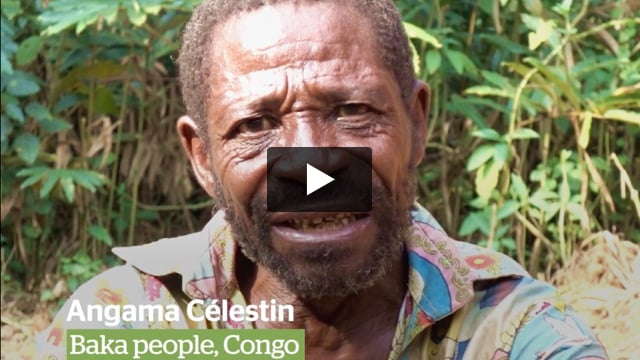
Learn more
From the forest
- Tribal Voice, ‘They started beating everyone’
- Tribal Voice, ‘We can’t stand this’
- Tribal Voice, ‘They beat me and torched my home’
- Tribal Voice, ‘I was whipped 45 times’
- Tribal Voice, Abuses committed by WWF-funded park rangers
- Tribal Voice, ‘We've had enough of this talk of 'boundaries' in the forest’
- Tribal Voice, ’The conservationists came to abuse me at my home’
- Baka people in Congo call out WWF for telling tales
- Baka people abused in the name of conservation
Press coverage and investigations:
- WWF getting slammed by US Congress over human rights abuses
- WWF’s Secret War – Buzzfeed
- Armed ecoguards funded by WWF ‘beat up Congo tribespeople’ – The Guardian
- Large-scale human rights violations’ taint Congo national park project - The Guardian
- Fortress conservation - The Ecologist
- Victims of the WWF – Zembla
- Forest of Fear – Channel 4 Unreported World
Reports:
Survival's essential reading:
- WWF is complicit in human rights abuses and illegal land theft
- The violence of "conservation"
- A Colonialist Land Grab Is Happening Right Now in Congo
- When WWF’s conservation looks like colonialism, it’s time for a new approach